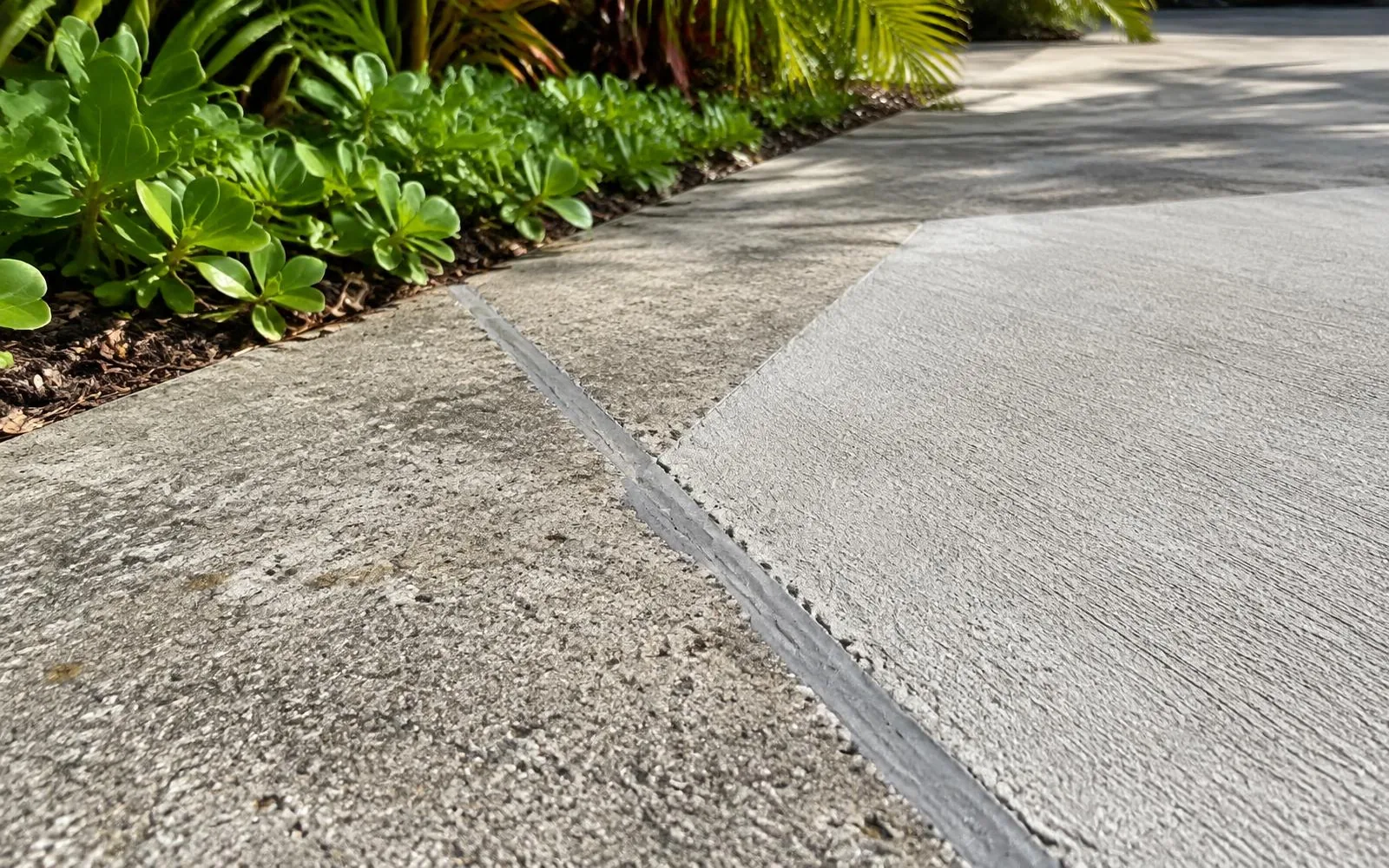
Not every tired-looking driveway needs to be torn out. If the slab is structurally sound (mostly level, draining properly and free of widespread breakage), targeted repairs can restore its appearance and protect it from further damage for a fraction of the cost of replacement. This page explains the most common repair methods used on Pembroke Pines driveways, what problems each one solves, and the signs that repair won't be enough.
Concrete Driveway Repair Near You: Common Problems in Pembroke Pines
South Florida conditions create a predictable set of issues. Intense sun breaks down surface sealers and fades color. Humidity and shade encourage black mildew and algae. Heavy summer rain can wash fine sand out from under slab edges, causing settlement. Tree roots lift panels, and everyday shrinkage produces hairline cracks in almost every slab. Identifying which of these you're dealing with determines the right fix.
Crack Repair
Cracks let water reach the base beneath the slab, which can lead to erosion and settlement over time. Sealing them is one of the most cost-effective things you can do for an aging driveway.
How it's done
- The crack is cleaned of dirt, weeds and loose material, sometimes routed to create a clean channel.
- A backer rod may be inserted into wider cracks so the sealant fills to the right depth.
- A flexible polyurethane or similar concrete crack sealant is applied and tooled smooth.
What to expect
Crack repair keeps water out and slows deterioration, but filled cracks remain visible. It works best on narrow, stable cracks. If one side of a crack is higher than the other, or the crack keeps growing, there's likely a problem underneath that sealing won't solve.
Resurfacing
Resurfacing applies a thin layer of polymer-modified cement overlay over the existing concrete. It covers surface damage like scaling, spalling, pitting, exposed aggregate and stubborn stains, giving the driveway a fresh, uniform appearance. Some overlays can be textured, colored or even stamped for a decorative look.
The key requirement is a sound base slab. Resurfacing a driveway that's actively cracking or settling usually leads to the same cracks reappearing in the overlay. Proper surface preparation, including thorough cleaning, repairing cracks first and sometimes grinding, is essential for the overlay to bond well.
Leveling Sunken Slabs
When one or two panels have settled (often near the garage door, along an edge or at the apron), leveling may restore them without replacement. There are two common methods:
- Polyurethane foam injection: Small holes are drilled through the slab and an expanding foam is injected underneath, lifting the panel and filling voids. It's lightweight, cures quickly and leaves small holes.
- Mudjacking (slab jacking): A cement-based slurry is pumped beneath the slab through larger holes to raise it. It typically costs less but is heavier and leaves larger patches.
Leveling works best when the slab itself is intact. If panels are broken into multiple pieces or the settlement is widespread, replacement is usually the better choice. Correcting the cause, such as a downspout discharging next to the slab, helps prevent the problem from returning.
Repair & Resurfacing Cost Calculator
Low estimate
$1,800
High estimate
$6,000
This is an estimated range. Your contractor will give a written quote.
These are general ranges only. Permits, HOA requirements, site conditions and design details can change the price.
Sealing
Sealing is preventive maintenance. A quality sealer helps concrete resist UV damage, water penetration, oil stains and mildew, all of which are major concerns in Pembroke Pines. There are two broad types:
- Penetrating sealers (silane/siloxane) soak into the concrete and repel water without changing the appearance much. They're a good choice for plain broom-finish driveways and stay less slippery.
- Film-forming sealers (acrylic and others) create a protective surface layer that enhances color and adds sheen. They're common on stamped and colored concrete but can be slippery without an anti-slip additive.
Clean the driveway thoroughly and repair cracks before sealing. Resealing every two to three years is a common guideline in South Florida. For decorative finishes, see our page on stamped concrete driveways in Pembroke Pines.
Cleaning Mildew, Algae and Stains
Dark streaks and green patches are common on shaded Pembroke Pines driveways. Pressure washing with an appropriate cleaner removes most growth; oil stains may need a degreaser or poultice. Cleaning is often the first step before any repair or sealing, and sometimes it's all a driveway really needs to look much better.
When Repair Is Enough vs. Full Replacement
Repair is usually enough when:
- Cracks are narrow, isolated and not offset vertically.
- The driveway is mostly level and drains away from the house.
- Surface wear is cosmetic, such as scaling, staining or fading.
- Only one or two panels have settled and remain intact.
Replacement is usually the better value when:
- Cracks are wide, numerous or spreading across many panels.
- Multiple sections have sunk, heaved or broken apart.
- Water pools because the original slope was wrong or has changed.
- Tree roots have significantly displaced the slab.
- Previous repairs have failed and the driveway is decades old.
If your driveway falls into the second list, read about concrete driveway replacement in Pembroke Pines. A contractor can assess the slab in person and give you an honest recommendation. If you're also thinking about adding space while you're at it, consider a driveway extension or widening project.
Cost and Permits
As general ranges, driveway resurfacing runs about $3 to $10 per sq ft, and sealing a typical driveway averages around $300. Crack filling and slab leveling depend on how much work is needed, but repairs usually cost far less than replacement. For comparison with new and replacement driveway pricing, see our concrete driveway cost guide for Pembroke Pines. Simple maintenance like sealing typically doesn't need a permit, but work that replaces concrete may. Our Pembroke Pines driveway permit guide explains the city's requirements, and your contractor can confirm what applies to your project.
Concrete Driveway Repair FAQs
Can cracks in my driveway be repaired?
Yes, narrow and isolated cracks can be cleaned and filled with a flexible concrete crack sealant to keep water out and slow further damage. Repairs won't make cracks disappear completely, and they don't fix structural problems underneath.
What is driveway resurfacing?
Resurfacing applies a thin cement-based overlay over a structurally sound driveway to cover surface wear, scaling and stains. It's not a fix for sinking slabs or wide structural cracks.
Can a sunken driveway slab be raised?
Often, yes. Slab leveling involves injecting polyurethane foam or a cement-based slurry beneath the slab and can lift a settled panel back into position if the slab itself is intact.
How often should I seal my concrete driveway?
In South Florida, sealing every two to three years is a common guideline. Sealer helps resist UV fading, mildew, oil stains and water intrusion.
When is replacement better than repair?
Replacement is usually the better value when damage is widespread, multiple slabs have sunk or heaved, water pools because the slope is wrong, or the same areas have been repaired before and failed again.