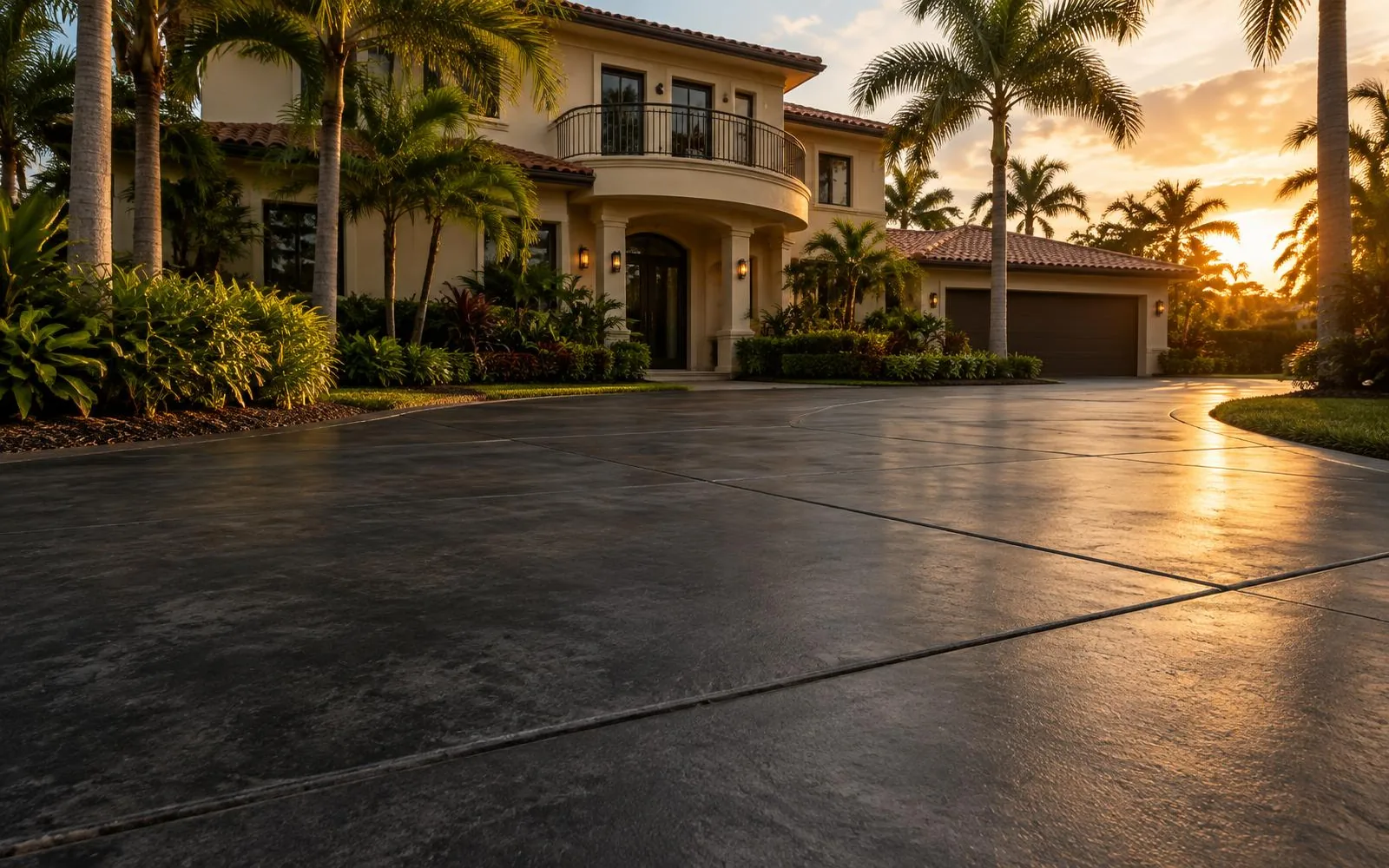
Charcoal and black concrete driveways have become a favorite design choice, especially with white stucco, modern farmhouse and contemporary homes. A dark driveway frames the house, hides some oil spots and gives a polished, upscale look. But in Pembroke Pines, where the sun is strong year-round, dark concrete comes with trade-offs worth understanding before you commit.
How Black Concrete Is Made
Integral color
Pigment (commonly carbon black or iron oxide) is mixed into the concrete at the batch plant. Because the color runs through the full depth of the slab, chips and wear don't reveal gray underneath. Integral color tends to produce a deep charcoal rather than true black, and it's the most durable option.
Color hardener
A dry pigment-and-cement powder is broadcast on fresh concrete and troweled in. It produces a more intense, uniform color and a harder surface. It's common with stamped concrete.
Stains and dyes
Acid stains react with concrete to create variegated tones; water-based stains and dyes offer a darker, more uniform color and can be applied to existing concrete in good condition. Surface-applied color is more vulnerable to wear and UV fading than integral color.
Heat: The Big Trade-Off
Dark surfaces absorb more sunlight. On a summer afternoon, a charcoal driveway gets much hotter to the touch than light gray concrete, enough to matter for bare feet and pets' paws. It also radiates more heat near the house. If your driveway gets full afternoon sun, consider a medium charcoal rather than near-black, or use dark color as a border with a lighter field.
Fading, Efflorescence and Blotchiness
- Fading: Strong UV gradually lightens dark color. Integral color holds up best; UV-resistant sealers slow fading.
- Efflorescence: White, powdery mineral deposits can rise to the surface and stand out sharply against dark concrete. They can usually be cleaned, and proper curing and sealing reduce them.
- Color variation: Differences in water content, finishing and curing can create blotchy areas. An experienced decorative concrete installer makes a big difference.
- Showing dirt: Dark surfaces hide oil but show dust, pollen, leaves and tire marks.
Sealing and Maintenance
Sealer is essential for dark concrete. It deepens the color, protects against UV and stains, and makes cleaning easier. Many homeowners reseal every two to three years in South Florida. Film-forming sealers add sheen but can be slippery when wet. Ask about an anti-slip additive. Clean regularly with a gentle rinse, treat oil spots promptly and avoid harsh chemicals that can strip sealer.
Cost
Colored concrete costs more than plain gray because of pigment, extra labor and sealing. As general ranges, plain broom-finish concrete runs about $5 to $8 per sq ft, while decorative and stamped concrete runs about $8 to $21 per sq ft. A simple integrally colored broom finish lands toward the lower end of the decorative range; stamped multi-tone charcoal work toward the top.
Decorative Concrete Cost Calculator
Low estimate
$4,800
High estimate
$12,600
This is an estimated range. Your contractor will give a written quote.
These are general ranges only. Permits, HOA requirements, site conditions and design details can change the price.
HOA Considerations
Many Pembroke Pines HOAs regulate driveway color. Some allow charcoal, others restrict it to specific shades or require samples. Submit your color choice with the architectural application before scheduling the pour. For broader planning, see our cost guide and permit guide.
Black Concrete Driveway FAQs
Does a black concrete driveway get hot in Florida?
Yes. Dark concrete absorbs more sunlight and gets noticeably hotter to the touch than light gray concrete. Consider that if children or pets walk barefoot on it.
Will black concrete fade?
Some fading is normal over years of strong sun, especially with surface-applied stains. Integral color fades less, and a UV-resistant sealer renewed every two to three years helps keep the color rich.
How much does a charcoal concrete driveway cost?
Colored and decorative concrete generally falls within the decorative range of about $8 to $21 per square foot, depending on how the color is applied and whether the surface is stamped.