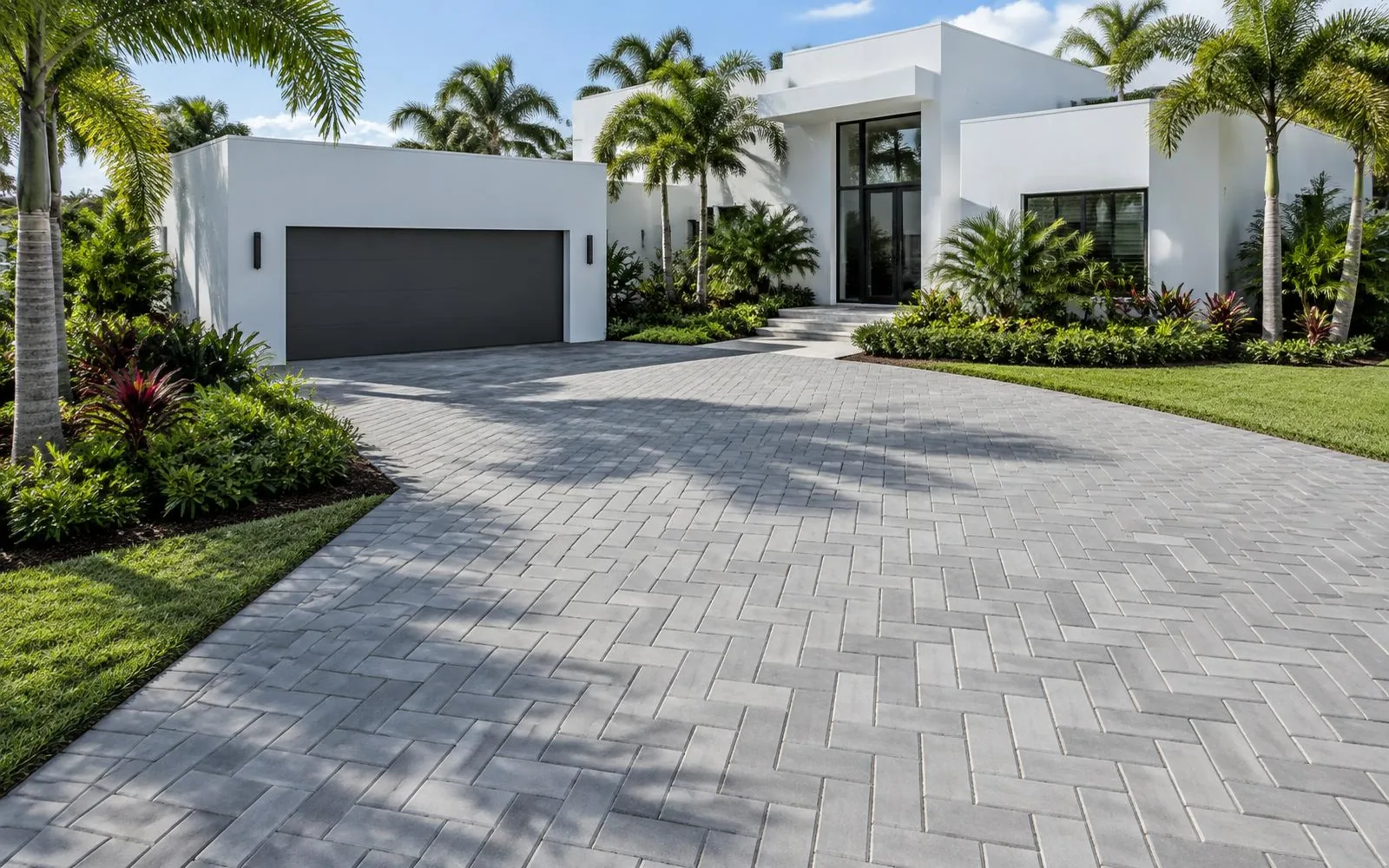
Pavers are everywhere in Pembroke Pines, from entry courtyards to pool decks to full driveways. Instead of one continuous slab, a paver driveway is built from individual units laid over a compacted base and bedding sand, then locked together with joint sand and edge restraints. The result is flexible, repairable and highly customizable. Here's what to know about the main paver types, how they compare with poured concrete and what upkeep looks like in our climate.
Types of Driveway Pavers in Pembroke Pines
Concrete pavers
Concrete pavers are the most common choice in South Florida. They're manufactured in molds under high pressure, which makes them dense and strong. They come in dozens of shapes, sizes, colors and textures, from classic rectangles and interlocking shapes to large-format slabs and tumbled "old world" styles. Popular patterns include herringbone (the strongest for vehicle traffic), running bond and basket weave.
Brick (clay) pavers
Clay brick pavers are fired in a kiln, giving them rich color that's baked in rather than added as pigment. They resist fading well in the Florida sun and offer a traditional look. They typically cost a bit more than concrete pavers and come in fewer shapes.
Permeable pavers
Permeable pavers have wider joints filled with small stone instead of sand, sitting on a deep, open-graded stone base. Rainwater passes through the joints and into the base, where it's stored and slowly soaks into the ground. For Pembroke Pines, where intense storms can overwhelm flat lots and swales, permeable pavers can reduce runoff and puddling. They require a more involved base, careful design for local soil and water table conditions, and occasional vacuuming or cleaning of the joints to keep them draining.
Travertine pavers
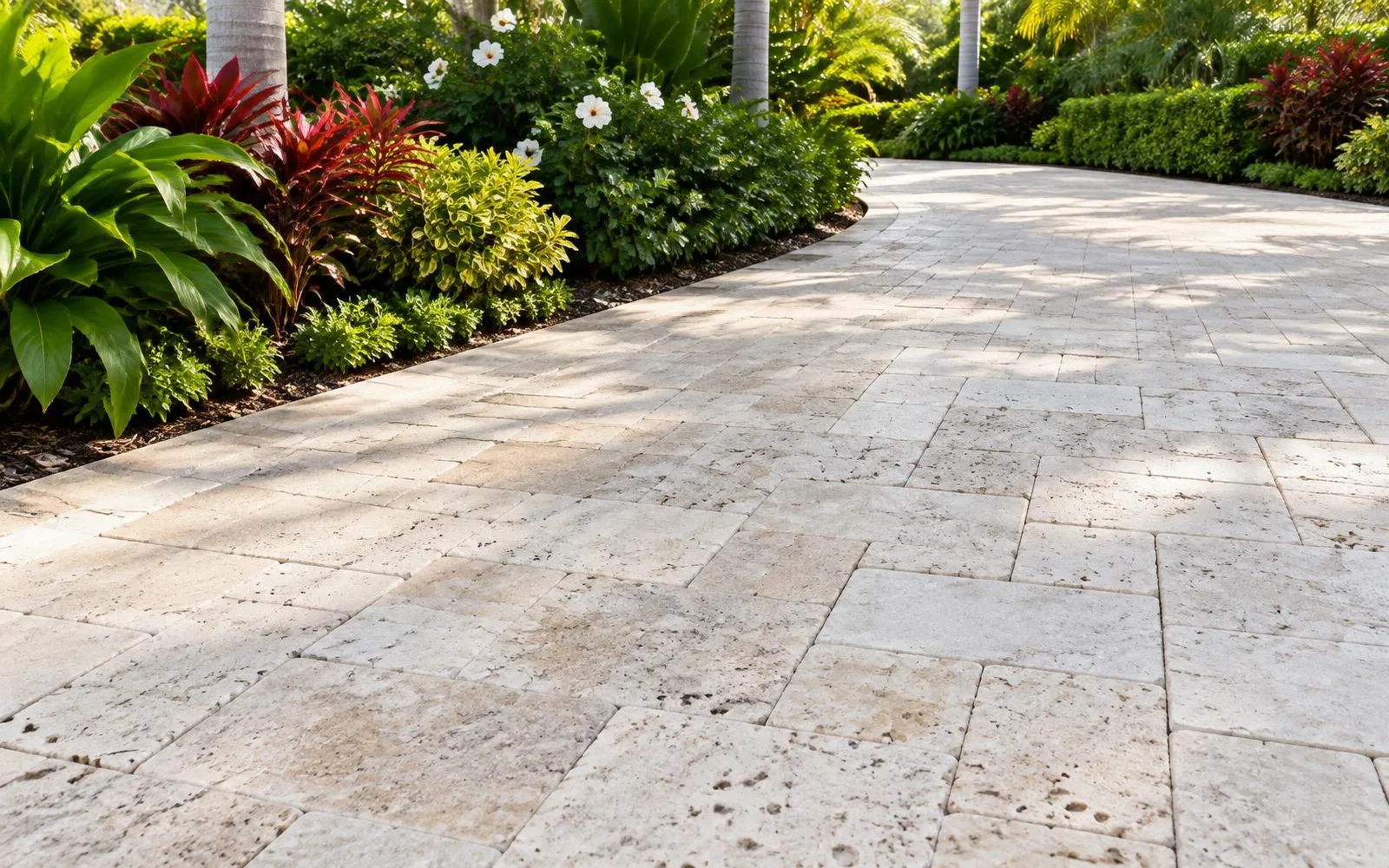
Travertine is a natural stone that's widely used around pools in South Florida because it stays relatively cool underfoot. For driveways, thicker travertine pavers (often 2 to 3 cm or more, specified for vehicle traffic) are needed. Travertine offers an upscale look but is porous, so sealing is important to resist staining from oil and leaves, and it usually sits at the higher end of the price range.
Pavers vs. Poured Concrete: Pros and Cons
Advantages of pavers
- Easy, invisible repairs: If a section settles or a root lifts some units, they can be pulled up, the base fixed and the same pavers relaid.
- Crack resistance: Joints allow slight movement, so you don't get the long cracks a slab can develop.
- Design flexibility: Endless combinations of color, shape and pattern, plus borders and inlays.
- Drainage options: Permeable systems can manage stormwater on site.
- Immediate use: There's no curing period; a paver driveway can usually be driven on as soon as it's finished.
Disadvantages of pavers
- Higher upfront cost than plain poured concrete.
- Ongoing maintenance: Joint sand washes out, weeds and ants can appear in joints, and periodic re-sanding and sealing is recommended.
- Settling: A poorly compacted base can lead to ruts and uneven areas, especially where tires repeatedly turn.
Advantages of poured concrete
- Lower cost for plain finishes.
- Smooth, continuous surface with minimal routine maintenance.
- Decorative options such as stamping and color can approximate paver looks. See stamped concrete driveways in Pembroke Pines.
Many homeowners split the difference with a poured concrete driveway and a paver border or apron accent.
How a Paver Driveway Is Built
- Excavation to the required depth, including removal of old surfaces.
- Installation and compaction of a crushed-stone base in layers.
- A screeded layer of bedding sand (or stone for permeable systems).
- Pavers laid in the chosen pattern and cut to fit edges.
- Edge restraints installed to keep pavers from spreading.
- Plate compaction to seat the pavers, then joint sand swept in.
The base is the most important factor in long-term performance. Ask your contractor about base depth and compaction for vehicle loads.
Re-Sanding and Sealing
Heavy rain, pressure washing and traffic gradually remove joint sand. Without it, pavers can shift and weeds take hold. Periodically sweeping in fresh sand or polymeric sand (which hardens when wetted) keeps the surface locked together. Sealing is optional but popular in South Florida: it enhances color, helps resist oil stains and mildew, and can stabilize joint sand. Many homeowners reseal every two to three years. Make sure pavers are clean and dry before sealing to avoid trapping moisture or efflorescence.
Paver Driveway Cost Calculator
Low estimate
$8,400
High estimate
$10,200
This is an estimated range. Your contractor will give a written quote.
These are general ranges only. Permits, HOA requirements, site conditions and design details can change the price.
Paver Driveway Cost in Pembroke Pines and Broward County
As general ranges, not quotes:
- Sand-set concrete paver driveways: about $14 to $17 per square foot (excluding demolition).
- Brick pavers: about $15 to $19 per square foot (excluding demolition).
- Removing existing pavers: about $4 to $5 per square foot.
Travertine varies more and often costs more because of materials. Permeable pavers usually cost more than standard pavers, and a contractor will quote after a site visit. Compare these with poured concrete in our Pembroke Pines concrete driveway cost guide.
Permits and HOA Approval
Paver driveways need a permit from the City of Pembroke Pines just like poured concrete, and HOAs commonly regulate paver color and pattern. Review our Pembroke Pines driveway permit guide before you start, and check your community's architectural guidelines.
Paver Driveway FAQs
How much do paver driveways cost in Pembroke Pines?
As a general range in Broward County, sand-set concrete paver driveways run about $14 to $17 per square foot and brick pavers about $15 to $19 per square foot, not including demolition. Removing existing pavers costs about $4 to $5 per square foot.
Are permeable pavers a good idea in Pembroke Pines?
They can be. Permeable pavers let rainwater soak through gaps into a stone base, which reduces runoff and puddling during heavy storms. They require a deeper, specially designed base and periodic cleaning of the joints, so ask your contractor whether your site is a good fit.
How often do pavers need to be re-sanded and sealed?
Joint sand often needs topping up every couple of years, especially after pressure washing. Sealing is optional but common in South Florida; many homeowners reseal every two to three years to stabilize sand, reduce weeds and protect color.
Are pavers better than poured concrete?
Neither is universally better. Pavers cost more but are easy to repair one section at a time and resist visible cracking. Poured concrete costs less, has a smoother surface and needs less routine maintenance.
Do I need a permit for a paver driveway in Pembroke Pines?
Yes. The City of Pembroke Pines requires a permit for driveways regardless of material, and HOAs often require approval for paver color and pattern.